The SEO Foundation Every Business Needs in 2026
Short answer: no, SEO is not dead in 2026 - it is the foundation everything else is built on. Every channel getting attention right now, from Google’s AI Overviews to being recommended inside ChatGPT, runs on the same signals search engines have always rewarded. Get the foundation right and every layer above it gets easier. Get it wrong and no amount of “AI optimization” will save you.
I have been ranking businesses on Google since 2003. I have watched the algorithm change hundreds of times, watched entire tactics get wiped out overnight, and watched a lot of businesses chase whatever was trendy that quarter. Here is what has stayed true the entire time: the companies that win are the ones with a solid foundation. Everything else is decoration.
This guide is the exact foundation I build for every client before we touch anything advanced. No theory, no fluff - just what actually moves rankings and revenue.
Is SEO still worth it in 2026?
Yes - and the businesses saying otherwise are usually the ones who never did it properly. Google still handles the overwhelming majority of the world’s searches, and even its AI features are drawn from the same index that ranks normal results. Google has stated plainly that optimizing for its generative AI features is still SEO. If your site cannot be crawled, understood, and trusted, you will not show up in the blue links, the Map Pack, or the AI answer. There is no side door.
Here is the part people miss. SEO is not a traffic channel you rent - it is an asset you own. Paid ads stop the second you stop paying. A page that ranks keeps producing leads month after month, and the authority you build compounds: every quality link and every strong page makes the next one easier to rank. I have clients whose best-performing pages were published years ago and are still bringing in business today.
The four pillars of a strong SEO foundation
Strip away the jargon and every legitimate SEO task falls into one of four buckets. If you understand these, you can evaluate any tactic anyone tries to sell you.
| Pillar | The question it answers | What it drives |
|---|---|---|
| Technical health | Can Google find, crawl, and render my pages? | Eligibility to rank at all |
| On-page relevance | Does this page answer what the searcher wants? | Which searches you match |
| Authority | Why should Google trust me over competitors? | How high you rank |
| User experience | Do visitors get what they came for? | Rankings held and leads converted |
Pillar 1: Technical health
If Google cannot crawl and render your pages efficiently, nothing else matters. This is the plumbing - invisible when it works, fatal when it does not. I audit it first on every engagement because it is the cheapest place to find big wins.
Crawlability and indexing
Google has to discover your pages before it can rank them. That means a clean internal linking structure where every important page is reachable within a few clicks of the homepage, an accurate XML sitemap, and a robots.txt that is not accidentally blocking things it should not. I regularly find sites where a stray disallow rule or a leftover noindex tag from a redesign is quietly keeping money pages out of the index. Check Google Search Console’s Pages report and see exactly what is indexed versus excluded, and why.
Site speed and Core Web Vitals
Speed is both a ranking signal and a conversion factor. Google measures real-world experience through Core Web Vitals: how fast the main content loads, how quickly the page responds to interaction, and how much the layout shifts while loading. The usual culprits are oversized images, render-blocking scripts, bloated page builders, and cheap hosting. Compress your images, serve modern formats, defer non-critical JavaScript, and get on hosting that is not overloaded. Most sites can cut load time in half without a redesign.
Mobile-first and secure
Google indexes the mobile version of your site. If your mobile experience is stripped down or hard to use, that is the version being judged. Test on an actual phone, not just a resized browser window. HTTPS is non-negotiable, and so is fixing broken links, redirect chains, and duplicate versions of the same page competing with each other.
Structured data
Schema markup tells search engines exactly what your content is - a business, a service, an article, a review, an FAQ. It does not directly boost rankings, but it makes you eligible for rich results and helps machines understand your content precisely. In an era where AI systems parse pages to build answers, that clarity matters more every year.
Technical quick wins
- Verify Google Search Console and check the Pages report for indexing errors.
- Compress every image and lazy-load anything below the fold.
- Kill redirect chains and fix broken internal links.
- Add schema markup to your key service and location pages.
- Test your real mobile experience on a real phone.
Pillar 2: On-page relevance and search intent
Once Google can read your pages, it needs to know what they are about and who they serve. This is where most businesses go wrong - not by ignoring keywords, but by misreading intent.
Match the intent, not just the keyword
Every search has a job behind it. Someone typing “what is a heat pump” wants an explanation. Someone typing “heat pump installation cost” is comparing. Someone typing “heat pump installer near me” is ready to call. Those three searches need three completely different pages. The fastest way to diagnose intent is to search the term yourself and look at what Google already ranks. If page one is all buying guides, your service page will not crack it - and vice versa.
One page, one job
Give every important topic its own dedicated page and make that page unmistakably the best resource on it. When you scatter the same topic across five thin pages, you split your own authority and force Google to guess which one to rank. Consolidate. A single strong page beats five weak ones every time.
Write the elements that do the work
- Title tag - the biggest on-page lever. Lead with the primary topic, keep it under about 60 characters, and write it to earn the click.
- Meta description - not a ranking factor, but it is your ad copy in the results. A compelling one lifts click-through, and clicks matter.
- H1 and headings - one clear H1 that states the topic, then H2s and H3s that break the page into scannable, question-shaped sections.
- Body content - genuinely useful depth. Answer the obvious follow-up questions on the same page so nobody has to go back to Google.
- Internal links - link related pages together with descriptive anchor text. This spreads authority and helps Google understand how your site fits together.
- Image alt text - describe the image plainly. It helps accessibility and image search.
Depth beats word count
Long content tends to rank, but not because Google counts words. It ranks because thorough content answers more questions, earns more links, and keeps people on the page. Never pad. Cover the topic completely, then stop. A tight 900-word page that fully answers a narrow question will beat a rambling 3,000-word page that never gets to the point.
Not sure which one is holding you back.
Most businesses can name the symptom but not the cause. On a free strategy call I will tell you which of the four pillars is actually costing you leads - and what to fix first.
Find My Weak PillarPillar 3: Authority and E-E-A-T
Relevance gets you considered. Authority decides where you land. Google needs a reason to trust you over the thousands of other pages chasing the same term.
Backlinks still matter - quality over quantity
A link from a respected, relevant site is a vote of confidence. Ten of those beat a thousand junk directory links, which at best do nothing and at worst get you penalized. Earn links the durable way: publish genuinely useful resources, get involved with local organizations and sponsorships, contribute real expertise to industry publications, and get listed in the directories that actually matter for your industry.
E-E-A-T: experience, expertise, authoritativeness, trust
Google’s quality guidelines emphasize four things, and the first one is the one most sites skip: experience. Have you actually done the thing you are writing about? Show it. Put real author names and credentials on your content. Include first-hand details, real numbers, real client outcomes. Show your address, phone number, and real team photos. Publish honest case studies. In competitive and sensitive niches, this is often the difference between page one and page four.
Brand signals and consistency
Google increasingly evaluates you as a brand, not just a domain. Consistent business information everywhere, genuine mentions across the web, branded searches, and steady review activity all feed the picture. This is also exactly what makes you visible in AI search, which leans heavily on third-party corroboration.
Pillar 4: User experience and conversion
Google pays attention to whether people find what they came for. Slow pages, confusing layouts, aggressive popups, and content that does not deliver push visitors straight back to the results - and that hurts you.
But here is the more important point: rankings are not the goal, revenue is. I have seen businesses celebrate a number-one ranking on a page that converts nobody. Every important page needs a clear next step, contact details that are impossible to miss, proof that you are legitimate (reviews, credentials, real photos), and a fast, clean layout on mobile. Traffic that does not convert is just an expensive vanity metric.
Key takeaways
- SEO is not dead - it is the base layer that AI search, local, and everything else is built on.
- Four pillars: technical health, on-page relevance, authority, and user experience.
- Match search intent before you optimize anything else.
- E-E-A-T means proving real experience, not just claiming expertise.
- Rankings without conversions are a vanity metric - optimize for revenue.
Where local SEO fits in
If you serve customers in a specific area, local SEO is not optional - it is likely your highest-return channel. Nearly half of all Google searches carry local intent, and the Map Pack sits above the organic results. Your Google Business Profile becomes as important as your website: primary category, complete information, steady review flow, photos, and consistent business details across the web. Your site still matters - it reinforces relevance and is where conversions happen - but the profile is what puts you on the map. I break the whole system down in how to win the Google Map Pack in your city, and it is the core of my Google Business Profile work. If you are in Chicagoland, I work with businesses across the entire region, from Naperville to Chicago.
Why the foundation matters more in the AI era
The rise of AI search did not replace SEO - it raised the stakes. When ChatGPT, Gemini, or Google’s AI Overviews assemble an answer, they pull from pages that are already crawlable, clear, well-structured, and trusted. That is the exact profile Google rewards in normal search.
What has changed is the margin for error. A traditional results page gives you ten organic slots. An AI answer typically cites a small handful of sources - often somewhere between two and seven. Being “on page one” is no longer good enough when the answer only names three companies. The sites getting cited are the ones with clean structure, direct answers, and genuine authority - in other words, the ones with the foundation handled. I go deep on the specifics in GEO vs AEO: how to get cited by ChatGPT and Gemini, and it is the basis of my Generative Engine Optimization and Answer Engine Optimization services.
If you want it straight from the source, Google’s own SEO Starter Guide lays out the same fundamentals I have been using for 20+ years.
Want this roadmap built around your business?
The 90-day plan below is the generic version. Yours would be sequenced around your market, your competitors and the money you are leaving on the table right now.
Get My Custom RoadmapThe seven mistakes I see most often
- Chasing tactics before fixing the foundation. Buying links or pumping out AI content while the site cannot be crawled properly is throwing money away.
- Targeting keywords that never buy. High volume feels good; ranking for terms with actual purchase intent pays the bills.
- Ignoring the Google Business Profile. For local businesses this is often the single biggest missed opportunity on the board.
- Publishing thin content at volume. Twenty shallow pages will not outperform four genuinely excellent ones - they will dilute you.
- Never updating what already ranks. Refreshing an existing page is usually the highest-ROI hour you can spend.
- No conversion path. Traffic with no clear next step is not a marketing strategy.
- Quitting at month three. SEO compounds. The businesses that lose are almost always the ones that stopped right before it took off.
How to measure whether it is working
Track the things tied to money, in this order:
- Leads and calls from organic search - the only metric that pays you. Track form fills, calls, and booked jobs by source.
- Rankings for terms that convert - watch your money keywords, not a vanity list of 500 terms.
- Google Business Profile actions - calls, direction requests, and website clicks from your listing.
- Organic sessions and click-through rate - from Search Console, which shows real impressions and clicks.
- Pages indexed and Core Web Vitals - your technical health check.
Give it time. Most businesses see meaningful movement in three to six months, with local gains often arriving faster and competitive terms taking longer. Transparent measurement is exactly why I include detailed reporting with every engagement - you should always know what you are getting. You can also see real client results and what clients say about working with me.
Your 90-day foundation roadmap
If you are starting from scratch, this is the order I would run it:
- Days 1-15: audit and fix. Verify Search Console, fix indexing errors, compress images, repair broken links, get the site fast and mobile-solid.
- Days 16-30: claim and complete. Fully optimize your Google Business Profile - correct primary category, every field filled, photos, services, hours. Clean up inconsistent business listings.
- Days 31-60: build the money pages. One strong page per core service, one per location you serve, each matched to real search intent with a clear conversion path.
- Days 61-90: authority and content. Start earning quality links, request reviews consistently, and publish content that answers your customers’ real questions. If you want help building the plan rather than running it yourself, that is what my consulting work is for.
- Ongoing: measure, refresh, expand. Update what is working, cut what is not, and keep building.
None of this is glamorous. All of it works. The businesses that win in 2026 are not the ones chasing every shiny tactic - they are the ones who got the foundation right and then built on it deliberately, month after month. That is the whole game, and it has been the whole game since I started doing this in 2003.
Ready to build it properly?
You have the whole blueprint now. If you would rather have it executed than attempt it between running your business, let us talk. I will show you exactly where you stand and what winning your market takes.
Book My Free Strategy CallFrequently asked questions
Is SEO dead in 2026?
How long does SEO take to work?
How much should SEO cost?
Do I still need SEO if I run Google Ads?
What should I fix first?
Can I do SEO myself?
Does AI-generated content hurt my rankings?
How many pages does my website need?
Where to go next.
Search visibility is one system. These guides cover the rest of it.
 AI Search
GEO vs AEO: How to Get Cited by ChatGPT and Gemini
Read this next if you want to understand how AI answers choose their sources, and why a citation beats a ranking.
Read the guide → Local SEO
How to Win the Google Map Pack in Your City
Read this next if you serve a local area and the Map Pack is where your calls come from.
Read the guide → SEO
What SEO Actually Involves: A Deep Dive Into How I Rank a Business
Read this next if you want the full SEO process, step by step, in the order I actually run it.
Read the guide →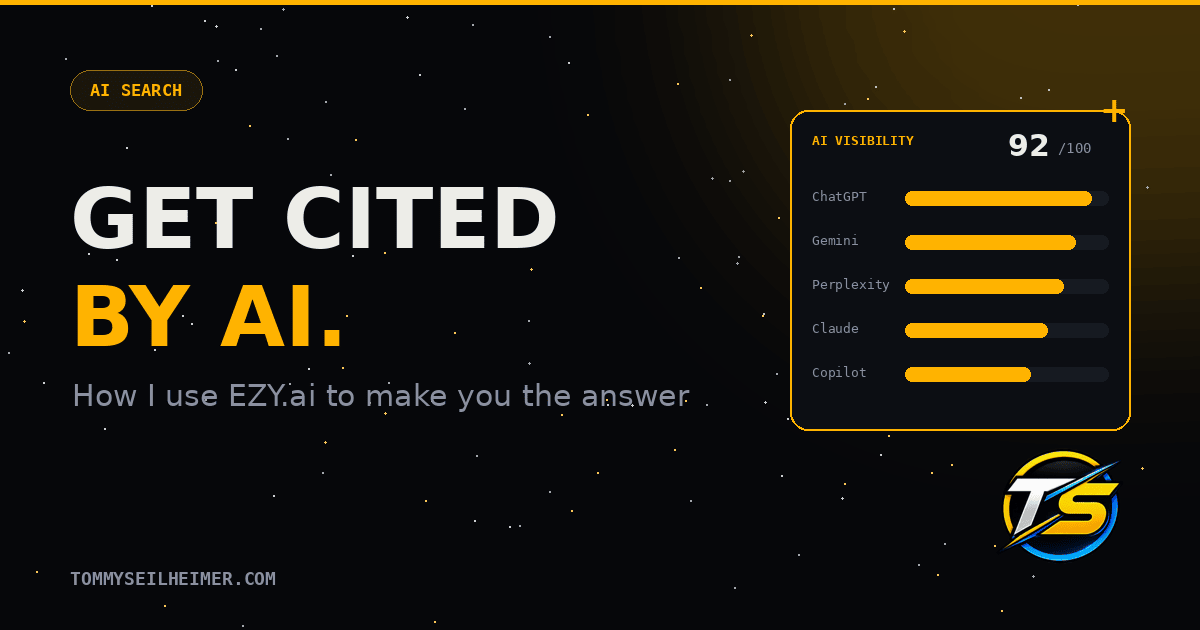 AI Search
Generative Engine Optimization: How I Use EZY.ai to Get Your Business Cited by AI
Read this next if you want AI visibility measured and moved month by month, with screenshots.
Read the guide →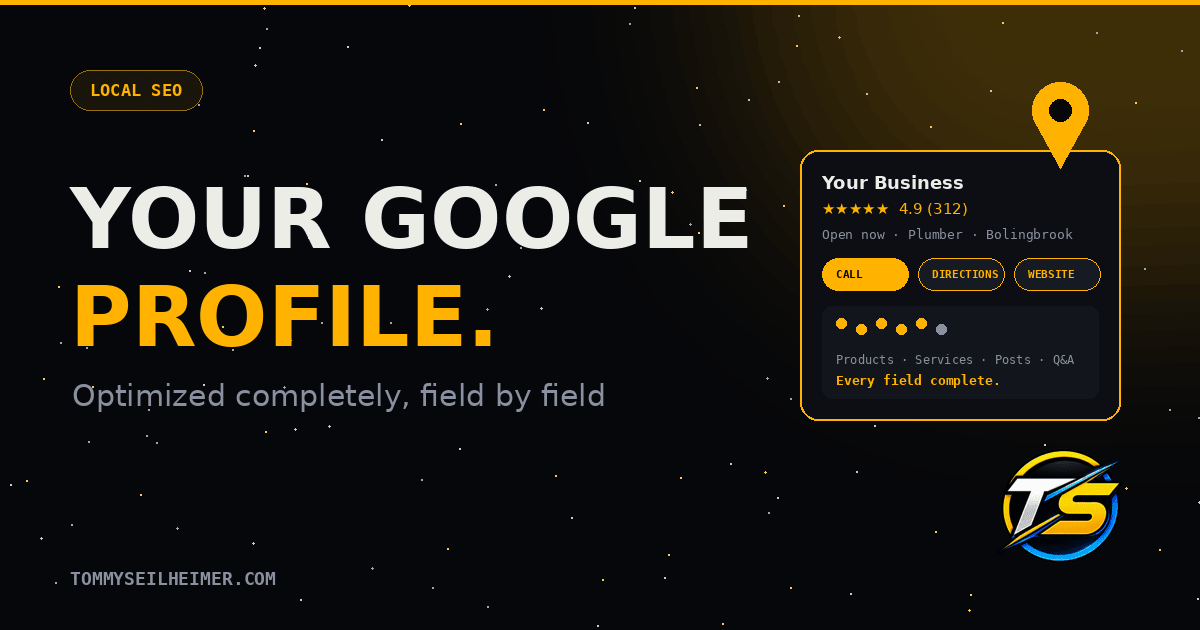 Local SEO
How I Optimize a Google Business Profile Completely, Field by Field
Read this next if your Google profile is half built. This fills every field.
Read the guide →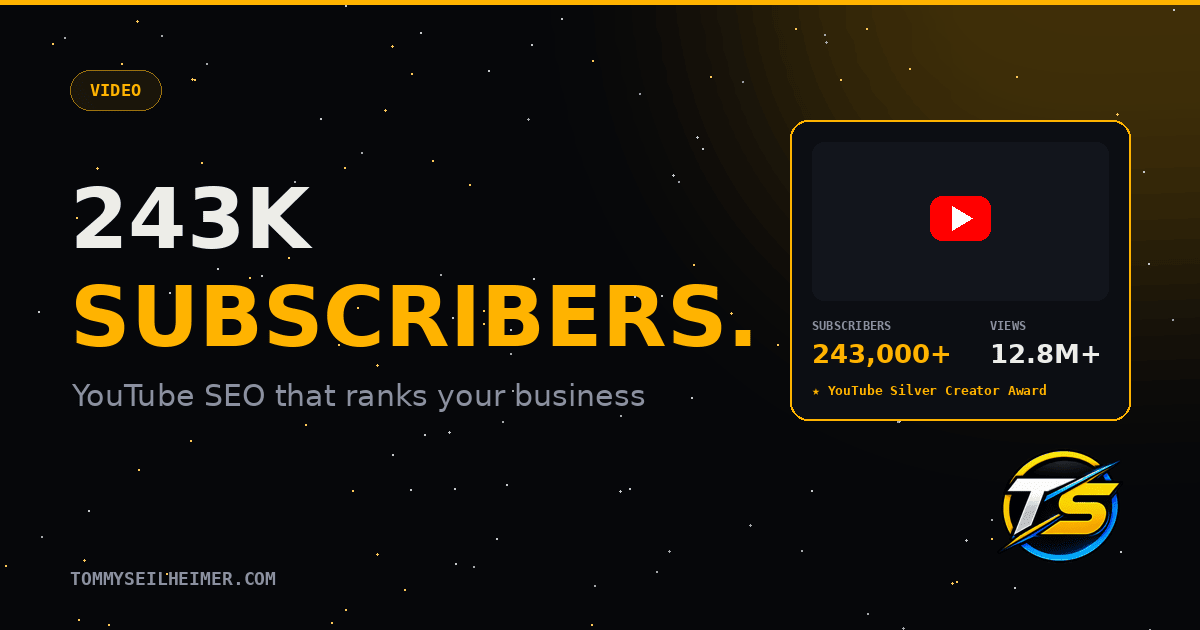 Video
YouTube SEO: How I Grew a Channel Past 243,000 Subscribers, and How Video Ranks Your Business
Read this next if you want the playbook that grew a channel past 243,000 subscribers, applied to your business.
Read the guide →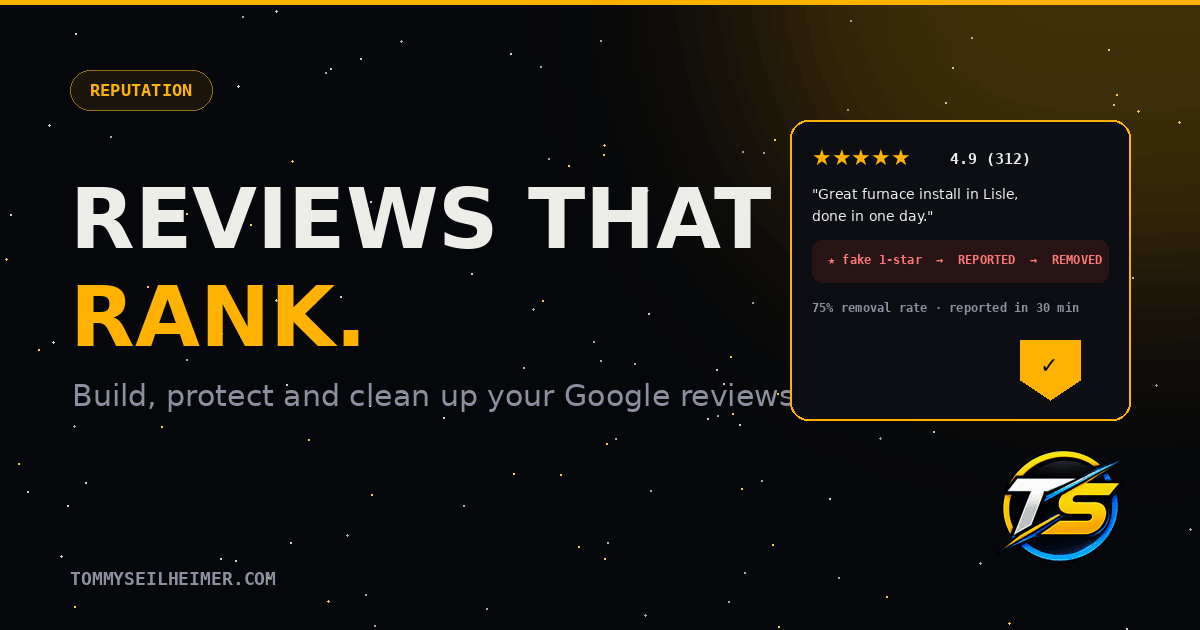 Reputation
Google Reviews and Reputation: The Complete Playbook, Including How Fake Reviews Get Removed
Read this next if reviews are your tiebreaker and you want the system that earns and protects them.
Read the guide →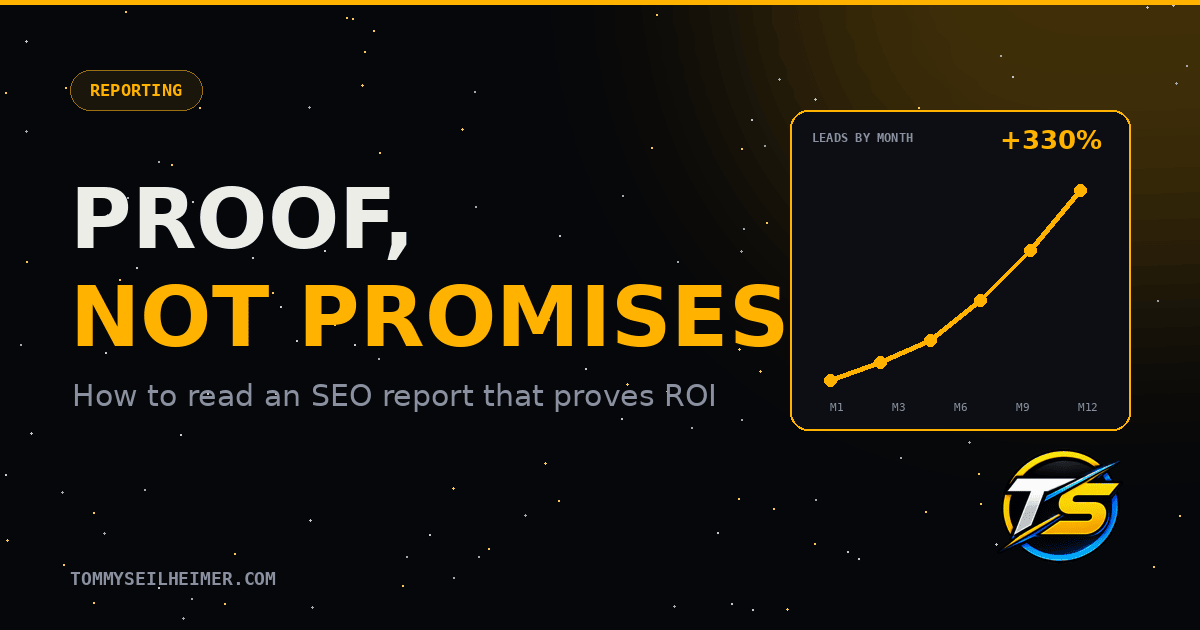 Reporting
How to Read an SEO Report: The Metrics That Prove Leads, and the Ones That Lie
Read this next if you cannot say what your SEO did last month, and you want a report that proves it.
Read the guide →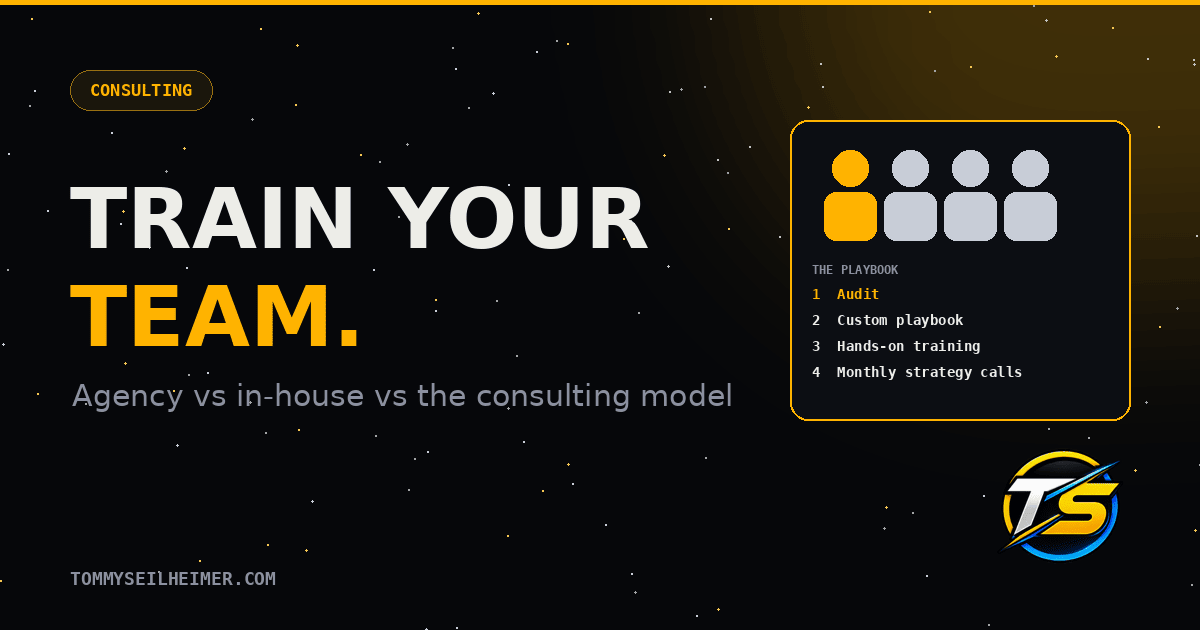 Consulting
Should You Hire an SEO Agency or Train Your Own Team? The Consulting Model, Explained
Read this next if you have a marketing team and want the method installed inside it.
Read the guide →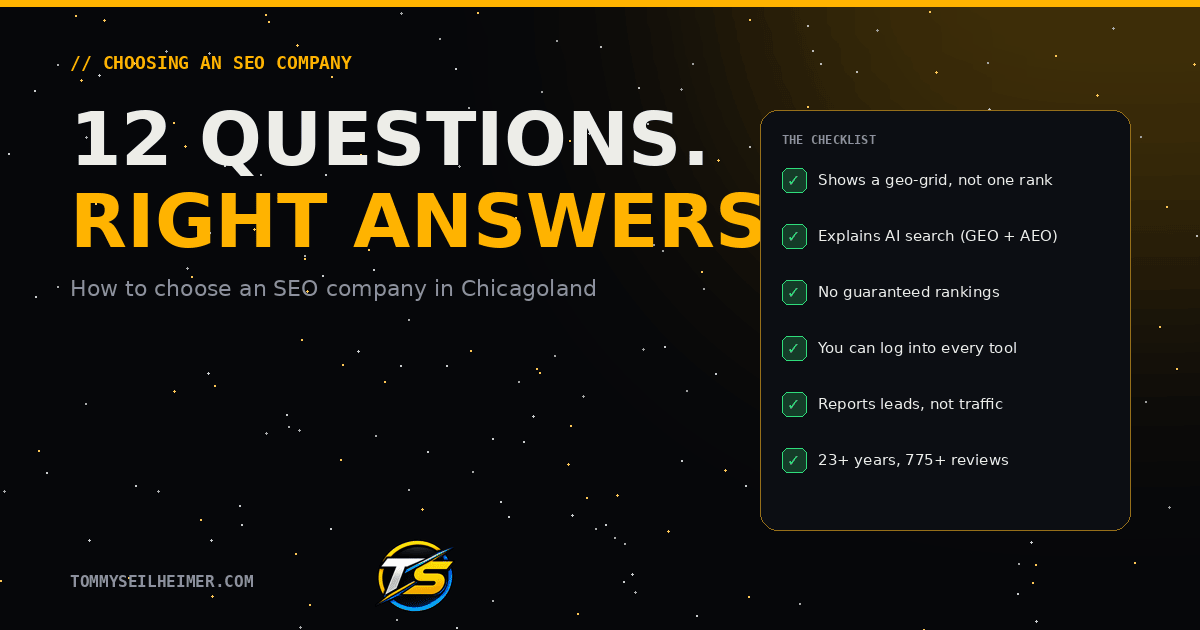 Choosing an Agency
How to Choose an SEO Company in Chicagoland: 12 Questions to Ask, and the Answers That Tell You Everything
Read this next if you are comparing SEO companies and want the questions that reveal which one will actually grow your business.
Read the guide →